I’ve come across an interesting concept which may be useful in understanding lots of different things. That is, at least for me, quite rare.
So I thought I would share. It’s an acronym – POSIWID and I am finding it really useful.
I am interested in the theories of some modern leftists that a planned economy is now finally possible because of the power of modern computers and informations systems (which as far as I can see would merely reproduce capital inside the system – but that’s another story).
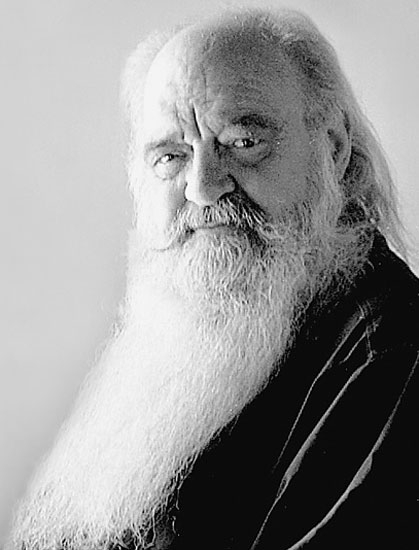
As I did a bit of googling on the issue I came across the work of Stafford Beer, a British cyberneticist, who developed a lot of really interesting ideas about how complex systems work, and who worked with Allende’s government in Chile trying to actually create a cybernetic state economy.
This meant I came across the acronym POSIWID coined by Stafford Beer.
It stands for the Purpose Of a System Is What It Does.
What this means is that you should judge any system by what it actually does rather than by claims about what it is meant to do. The outputs are the truth, the intentions are commentary.
As Stafford Beer said “The purpose of a system is what it does. There is after all, no point in claiming that the purpose of a system is to do what it constantly fails to do.”
What a system actually produces is its purpose, no matter what claims are made about it.
POSIWID is a diagnostic tool which strips away the stories to reveal the system’s actual behaviour.
This five-minute video explains it nicely.
It’s an apparently simple idea but I’ve been thinking about it a lot, because it turns out it can help one think through lots of different things.
For example, the UK’s system for regulating property development via the planning system has stated aims such as preserving unbuilt green zones around cities, or preventing new development from creating various bad environmental impacts, etc. But using POSIWID the question becomes not what the stated aims are (commentary) but what the planning system actually outputs (‘what it does’), which is to create a housing shortage which in turn has important effects on economic activity and the distribution of asset wealth in the UK.
Another, perhaps contentious, example. The stated aims of the European Union could be summarised as promoting peace and collaboration amongst its member states, increasing the well-being of its citizens, and ensuring freedom, security and justice within its borders. But the POSIWID approach asks what the EU system actually outputs, and what it outputs is a constant and ever-growing system of rules, regulations and enforcement mechanisms. This is not intended as a critique of the EU but merely an attempt, using POSIWID, to see the EU as it actually is and what it actually does.
Like all thinking tools, one must be careful not to overdo it. One can only simplify or codify the complexity of the real world so far before one starts interrogating imaginary objects rather than real things. But nevertheless I think the POSIWID approach is a very useful starting point when thinking about complex systems. Start with what it actually does (its real outputs) rather than with what its stated purpose is (which is just commentary).
Stafford Beer had a very complex and colourful career including a period advising Allende’s Chile (Beer seemed to be a bit of a Trot). I don’t know much about his wider work but I do think the POSIWID approach is a very useful tool but like all tools best used with caution.
There is a series of podcasts looking at his role in the Allende experiment that you can find here:
https://www.the-santiago-boys.com
There is also this interesting article on Stafford Beer.
“The Tragedy of Stafford Beer” By Kevin Munger
https://kevinmunger.substack.com/p/the-tragedy-of-stafford-beer